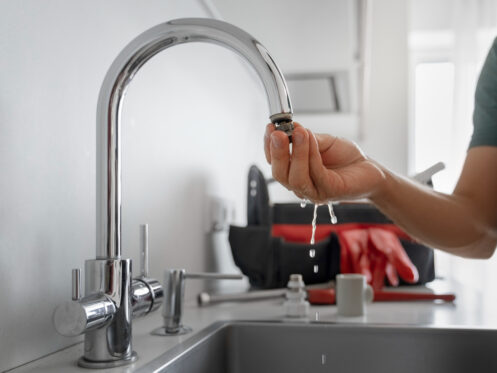
The most common causes of low water pressure include clogged pipes from mineral buildup, faulty fixtures, water leaks, and problems with the main water supply.
Low water pressure in your home can turn simple tasks like showering or washing dishes into frustrating experiences. When faucets barely drip and showerheads produce weak streams, daily routines become more difficult and time-consuming.
These issues can affect a single faucet or the entire house, depending on where the problem occurs. Understanding what causes water pressure to drop helps homeowners identify the right solution quickly.
In this article, you’ll learn how to identify the main causes of low water pressure and apply the right fixes to restore steady flow.
Here’s what you need to know:
- Understanding why water pressure drops in your home
- Common causes of low water pressure in houses
- How to diagnose your low water pressure problem
- How to fix low water pressure the right way
- When to call a licensed plumber
Keep reading! Some fixes are simple enough to handle without professional help, while others require a plumber’s expertise to prevent further damage to the plumbing system.
Understanding why water pressure drops in your home
Water pressure problems in plumbing systems occur when water flow becomes weaker than normal levels. These issues affect how well appliances work and can signal serious problems that need quick fixes to prevent costly damage.
What “low water pressure” actually means for your plumbing system
Low water pressure happens when water flows through pipes at less than 40-45 pounds per square inch (PSI). Normal home water pressure ranges from 40 to 80 PSI.
When pressure drops, it means something is blocking or limiting water flow in the plumbing system. This could be inside the home’s pipes or from the main water supply line.
Common pressure levels:
- Below 40 PSI: Considered low pressure
- 40-60 PSI: Good working pressure
- Above 80 PSI: Too high and may damage fixtures
The problem might affect just one faucet or the whole house. If only one fixture has weak flow, the issue is usually with that specific pipe or fixture. When the whole house has low pressure, the problem is often with the main water line or pressure regulator.
How water pressure affects appliance performance and comfort
Low water pressure makes daily tasks harder and slower. Showers become weak and unsatisfying. Dishwashers and washing machines take longer to fill and may not clean properly.
Toilets with low-pressure refill slowly after flushing. This can be especially frustrating when multiple people need to use the bathroom.
Appliances affected by low pressure:
- Dishwashers may not spray dishes effectively
- Washing machines fill slowly and rinse poorly
- Water heaters work harder to maintain the temperature
- Irrigation systems cannot cover lawn areas properly
Kitchen tasks like filling pots or washing dishes become time-consuming. The weak flow makes it hard to rinse soap off dishes completely.
Some appliances need minimum pressure levels to work properly. When pressure drops too low, these appliances may shut off or perform poorly.
Why ignoring pressure issues can lead to long-term damage
Putting off pressure repairs often makes problems worse and more expensive. Small clogs can grow into complete blockages that require pipe replacement.
Low pressure sometimes signals pipe corrosion inside the walls. This corrosion can cause leaks that damage drywall, floors, and foundations. Water damage repairs cost much more than fixing the original pressure problem.
Potential long-term problems:
- Pipe bursts from buildup and corrosion
- Mold growth from hidden leaks
- Foundation damage from water seepage
- Higher water bills from inefficient fixtures
Pressure regulators that fail completely can cause sudden high pressure. This high pressure can burst pipes and flood homes quickly.
Appliances that struggle with low pressure wear out faster. They work harder to function properly, which shortens their lifespan and increases repair costs.
Early detection and repair of plumbing water pressure issues saves money and prevents major home damage.
Common causes of low water pressure in houses
Low water pressure in house situations typically stems from four main problems: hidden leaks that drain water away from fixtures, mineral deposits blocking pipes, faulty pressure equipment, and issues with the city’s water system.
Hidden plumbing leaks that waste water and lower pressure
Hidden leaks reduce water pressure by diverting water away from faucets and showers. These leaks often occur behind walls, under slabs, or in crawl spaces where homeowners cannot see them.
Common leak locations include:
- Pipe joints and connections
- Water heater tanks and fittings
- Toilet base seals
- Underground service lines
Small leaks may only cause minor pressure drops. Large leaks can reduce pressure throughout the entire house.
Homeowners can check for leaks by reading their water meter before and after a two-hour period without using water. Any meter movement indicates a leak somewhere in the system.
According to the U.S. EPA WaterSense, the average household’s leaks can waste nearly 10,000 gallons of water per year, and one in ten homes has leaks wasting 90 gallons or more per day—fixing leaks restores performance and helps stabilize pressure.
Professional plumbers use electronic listening devices and thermal imaging cameras to locate hidden leaks. Early detection prevents water damage and restores normal pressure levels.
Mineral buildup and clogged pipes from hard water
Hard water contains high levels of calcium and magnesium minerals. These minerals stick to pipe walls over time and create thick buildup that blocks water flow.
Galvanized steel pipes suffer the most damage from mineral buildup. The minerals react with the metal and create rust deposits that narrow the pipe opening.
Signs of mineral buildup include:
- White crusty deposits on faucet aerators
- Reduced flow from specific fixtures
- Water that tastes metallic
- Stains on sinks and tubs
Homeowners can clean faucet aerators and showerheads with vinegar to remove light mineral deposits. Severe buildup requires professional pipe cleaning or replacement.
Water softener systems prevent future mineral buildup by removing calcium and magnesium before water enters the house pipes.
Failing pressure regulators and outdated plumbing systems
Pressure regulators control the water pressure entering a house from the main water line. These devices typically last 10 to 15 years before they start failing.
A failing pressure regulator may cause pressure to drop suddenly throughout the house. Some regulators stick in the closed position and severely limit water flow.
Outdated plumbing systems also contribute to low water pressure in household situations. Galvanized pipes installed before 1960 often have significant corrosion that blocks water flow.
Old plumbing problems include:
- Corroded pipe interiors
- Undersized pipe diameters
- Multiple pipe material connections
- Outdated fixture designs
Replacing old galvanized pipes with copper or PEX materials improves water pressure significantly. Modern pipes have smooth interiors that allow better water flow.
Municipal water supply problems that affect entire neighborhoods
City water systems sometimes experience problems that reduce pressure to entire neighborhoods. These issues affect multiple houses at the same time.
Common municipal problems include:
- Main water line breaks
- Pump station failures
- High demand during peak usage times
- Maintenance work on water lines
Homeowners should contact their water utility company when neighbors also experience low pressure. The utility can confirm system-wide problems and provide estimated repair times.
Some older neighborhoods have undersized water mains that cannot handle current demand levels. Water companies gradually replace these mains during scheduled infrastructure upgrades.
Peak usage times, like morning and evening hours, often cause temporary pressure drops in areas with older water systems.
How to diagnose your low water pressure problem
Finding the root cause of low water pressure starts with simple tests you can do yourself. A pressure gauge test will give you exact numbers, while specific symptoms can point to particular fixtures or plumbing issues.
Quick at-home checks before calling a plumber
The first step is testing multiple fixtures throughout the home. Turn on faucets in different rooms at the same time to see if the problem affects the whole house or just one area.
Check if the issue happens with both hot and cold water. If only hot water has low pressure, the problem likely involves the water heater or hot water pipes.
Key areas to test:
- Kitchen sink faucet
- Bathroom sink faucets
- Shower heads
- Outdoor spigots
- Washing machine connections
Look for obvious leaks under sinks, around the water heater, and in the basement or crawl space. Even small leaks can reduce pressure throughout the home.
Test the main water shutoff valve to make sure it’s fully open. This valve is usually located near where the water line enters the house.
Remove and inspect faucet aerators and shower heads. Mineral buildup and debris often clog these small screens, causing low shower pressure and reduced flow at sinks.
Using a pressure gauge to measure your home’s water flow
A water pressure gauge gives exact readings to determine if the pressure is actually low. These gauges cost around $10-15 at hardware stores and screw onto outdoor faucets.
Steps to measure water pressure:
- Turn off all water fixtures inside the house
- Attach the gauge to an outdoor spigot closest to the water meter
- Turn the faucet on fully
- Read the pressure measurement
Normal home water pressure ranges from 40 to 60 psi. Pressure below 40 psi causes noticeable flow problems. Pressure above 80 psi can damage pipes and fixtures.
According to the U.S. EPA WaterSense, typical residential service pressure should be kept around 45–60 psi, and most plumbing codes require installing a pressure-reducing valve (PRV) when supply pressure exceeds 80 psi.
Test pressure at different times of day. Morning and evening readings might be lower due to higher neighborhood demand.
If the gauge shows normal pressure at the outdoor faucet but indoor fixtures have low flow, the problem is inside the home’s plumbing system.
Signs that point to a specific plumbing or appliance issue
Different symptoms help identify where the problem originates. Low shower pressure combined with good sink flow often means clogged shower heads or valve problems.
Common symptom patterns:
| Problem Location | Symptoms |
| Single fixture | Only one faucet or shower was affected |
| Hot water only | Water heater or hot water pipe issues |
| Whole house | Main line, pressure regulator, or municipal supply |
| Upper floors only | Pump problems or gravity feed issues |
Sudden pressure loss throughout the house suggests a major leak or municipal water problem. Gradual pressure decline over time usually means mineral buildup in pipes.
If pressure is fine when using one fixture but drops when multiple fixtures run, the main water line may be too small or partially blocked.
Brown or rusty water combined with low pressure indicates corroded pipes that need replacement.
How to fix low water pressure the right way
Fixing low water pressure requires a systematic approach that starts with simple cleaning tasks and progresses to more complex repairs when needed. Professional solutions and regular maintenance help ensure long-lasting results.
Simple DIY solutions that restore steady flow
Most homeowners can fix low water pressure by starting with basic cleaning and inspection tasks. These simple steps solve many common pressure problems without calling a plumber.
Check and clean aerators and showerheads first. Remove aerators from faucets and showerheads to clean out mineral deposits and debris. Soak these parts in white vinegar for 2-4 hours to dissolve buildup.
Inspect all shutoff valves throughout the home. Make sure the main water shutoff valves and individual fixture shutoff valves are fully open. Even partially closed valves reduce water pressure significantly.
Test water pressure with a gauge. Attach a pressure gauge to an outdoor faucet to measure current pressure levels. Normal water pressure should read between 40-60 psi.
| DIY Fix | Time Required | Difficulty Level |
| Clean aerators | 30 minutes | Easy |
| Check shutoff valves | 15 minutes | Easy |
| Test pressure gauge | 10 minutes | Easy |
| Replace worn washers | 45 minutes | Medium |
Replace worn washers and gaskets in faucets. Old or damaged washers restrict water flow and create pressure drops. This simple replacement often restores normal pressure immediately.
When it’s time to replace old or corroded pipes
Homeowners should consider pipe replacement when simple fixes don’t restore adequate water pressure. Old pipes with mineral buildup or corrosion require professional replacement for permanent solutions.
Galvanized steel pipes need replacement after 20-50 years. These pipes develop rust and mineral deposits that narrow the interior diameter. The buildup reduces water flow and creates persistent low-pressure problems.
Copper pipes last longer but still corrode over time. Pinhole leaks and corrosion spots develop after 50-70 years of use. Multiple small leaks throughout the system reduce overall water pressure.
Modern pipe materials provide better long-term performance. PEX and CPVC pipes resist mineral buildup and corrosion better than older materials. These newer options maintain consistent water pressure for decades.
Professional plumbers can inspect pipes with cameras to identify problem areas without extensive demolition. This technology helps determine which sections need replacement versus simple cleaning or repair.
How professional plumbers balance pressure for long-term stability
Professional plumbers use specialized tools and techniques to diagnose and fix complex water pressure issues that DIY methods cannot address effectively.
Pressure regulators require professional adjustment or replacement. These devices control incoming water pressure from municipal supplies. Faulty regulators cause pressure problems throughout the entire home.
Water pressure booster pumps help homes with consistently low municipal pressure. Plumbers install these systems when the municipal supply provides less than 40 psi. The pumps increase pressure to optimal levels.
Professional leak detection finds hidden problems. Plumbers use electronic leak detection equipment to locate underground leaks and hidden pipe damage. These leaks reduce overall system pressure significantly.
System-wide pressure balancing ensures consistent flow. Plumbers install pressure-balancing valves and adjust the entire plumbing system. This prevents pressure drops when multiple fixtures operate simultaneously.
Preventative maintenance tips to keep water pressure consistent
Regular maintenance prevents many water pressure problems before they develop into major issues requiring expensive repairs or replacements.
Clean aerators and showerheads every 3-6 months. Regular cleaning prevents mineral buildup that gradually reduces water flow. This simple task maintains consistent pressure over time.
Check for small leaks during monthly inspections. Look for water stains, damp spots, and unusual water bill increases. Early leak detection prevents larger pressure problems from developing.
Test water pressure quarterly with a gauge. Monitor pressure readings to identify gradual decreases that indicate developing problems. Document readings to track changes over time.
Schedule annual professional plumbing inspections. Professional plumbers can identify potential issues before they cause pressure problems. Early intervention costs less than emergency repairs.
When to call a licensed plumber
Some low water pressure problems require expert help to fix safely and correctly. Licensed plumbers have special tools to find hidden leaks and can spot warning signs that homeowners often miss.
Warning signs your low-pressure issue needs expert help
Multiple fixtures losing pressure at once signal a serious problem in the main water line or pressure regulator. This is not a simple fix that homeowners can handle.
Water discoloration, along with low pressure, often means pipe corrosion or mineral buildup deep in the plumbing system. These issues require professional pipe replacement or cleaning.
Sudden pressure drops that happen without warning can indicate burst pipes or major leaks. Emergency plumber visits prevent water damage and costly repairs.
The following signs need immediate professional attention:
- Water pressure under 20 PSI throughout the house
- Strange noises from pipes when water runs
- Wet spots on walls or ceilings
- High water bills with no clear cause
- Complete loss of hot or cold water pressure
Age of plumbing systems matters too. Homes over 20 years old with original pipes often need professional assessment when pressure drops occur.
How professionals find and repair hidden leaks
Licensed plumbers use electronic leak detection equipment that listens for water movement behind walls and under concrete slabs. This technology finds leaks without tearing up floors or walls.
Pressure testing tools help plumbers measure water flow at different points in the system. They can pinpoint exactly where pressure drops happen in the pipes.
Camera inspections through drain lines show the inside condition of pipes. Plumbers can see cracks, blockages, and root intrusion that cause pressure problems.
Professional repair methods include:
- Pipe relining for cracked sewer and water lines
- Hydro jetting to clear severe mineral buildup
- Pressure regulator replacement when units fail
- Mainline repairs for municipal connection issues
These repairs require permits and inspections that only licensed professionals can handle legally.
Benefits of scheduling regular plumbing inspections
Annual plumbing inspections catch small problems before they become expensive emergencies. Plumbers check pressure levels, inspect visible pipes, and test fixtures during these visits.
Preventive maintenance includes cleaning aerators, checking water heater settings, and testing pressure regulators. These simple steps keep water flowing at proper levels.
Early problem detection saves money on water bills and prevents property damage. Small leaks waste thousands of gallons per year and weaken building structures.
Regular inspections provide these advantages:
- Warranty protection for new plumbing work
- Insurance documentation for potential claims
- Resale value protection for home sales
- Code compliance updates for older systems
Professional maintenance records help track system performance over time. This information helps plumbers make better repair decisions and homeowners plan for future upgrades.
Conclusion
Low water pressure affects many homes across the country. The causes range from simple fixes to complex plumbing problems.
Some problems can be fixed by homeowners. Cleaning faucet aerators and showerheads often helps. Checking for visible leaks is also simple.
More serious issues need professional help. Pipe corrosion and main water line problems require expert repair. Municipal supply issues also need the utility company’s contact.
Regular maintenance prevents many water pressure problems. Annual water heater flushing removes sediment buildup. Cleaning fixtures every few months keeps water flowing well.
Quick action saves money and prevents damage. Small leaks can become big problems if ignored. Early repairs cost less than major replacements.
Most water pressure issues have solutions. Homeowners can fix simple problems themselves. Complex issues require professional plumbers, but can be resolved effectively.
Schedule a professional water pressure assessment today to diagnose the root cause and restore consistent 45–60 PSI across your home.