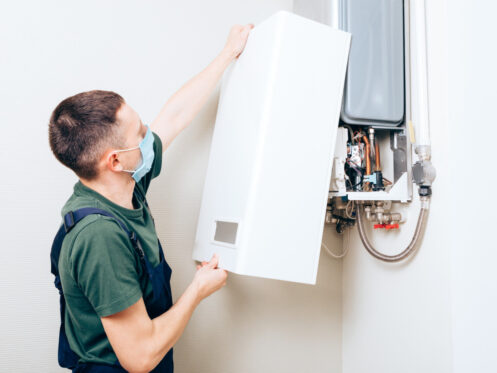
Recognizing early warning signs you need a new water heater like inconsistent water temperature, rusty water, strange noises, or rising energy bills can help you replace your water heater before you’re stuck with cold water and emergency repair costs. Most water heaters give you plenty of notice before they completely break down.
Nobody wants to wake up to an ice-cold shower on a busy morning. Your water heater works behind the scenes every day, but when it starts to fail, the signs are usually clear if you know what to look for.
We’ll walk you through the key indicators that signal it’s time for a replacement, help you understand when repairs make sense versus buying new, and show you how to choose the right system for your home.
Here’s what you need to know:
- How to tell when your water heater is on its last legs
- When repairs won’t cut it and replacement is the smarter choice
- Understanding your water heater’s lifespan
- How proactive maintenance can delay replacement
- Choosing the right replacement water heater
Keep reading! By staying ahead of these warning signs, you can avoid the inconvenience of unexpected breakdowns and make a smart decision about your home’s hot water needs.
How to tell when your water heater is on its last legs
Water heaters typically last 8 to 12 years, but several warning signs can indicate problems before complete failure. Recognizing these symptoms early helps us avoid emergency repairs and unexpected cold showers.
Common signs your water heater needs repair or replacement
Age is the first factor we should consider. According to the U.S. Department of Energy, conventional storage (tank) water heaters generally last 10–15 years, while tankless (on-demand) models often exceed 20 years due to fewer corrosion risks and replaceable parts.
Water quality changes signal internal problems. Rusty or discolored water coming from hot water taps indicates corrosion inside the tank. This rust often means the tank lining has deteriorated beyond repair.
Visible leaks around the base require immediate attention. Small puddles or moisture around the water heater suggest internal tank damage. These leaks typically worsen over time and can cause significant water damage.
Rising energy bills without increased usage point to efficiency problems. As water heaters age, they work harder to maintain the same temperature. This extra effort shows up in higher monthly utility costs.
Reduced hot water supply affects daily routines. If our hot water runs out faster than before during showers or dishwashing, the heating elements or tank capacity may be failing.
Why inconsistent water temperature is a major warning
Inconsistent water temperature indicates serious internal problems. When our water switches between hot and lukewarm during use, the heating system is struggling to maintain proper temperature.
Sediment buildup causes temperature fluctuations. Minerals from hard water settle at the bottom of the tank over time. This sediment layer insulates the heating element from the water, making heating less efficient.
Failing heating elements create temperature problems. Electric water heaters have two heating elements that can burn out separately. When one fails, we get inconsistent temperatures and reduced hot water capacity.
Thermostat malfunctions affect temperature control. A broken thermostat cannot properly regulate water temperature. This leads to water that is either too hot, too cold, or constantly changing.
These temperature issues rarely resolve on their own. While some problems might seem to improve temporarily, inconsistent water temperature usually gets worse without professional repair or replacement.
How strange noises can signal hidden tank damage
Unusual sounds from our water heater indicate internal problems. Normal operation should be relatively quiet, so any new or loud noises deserve investigation.
Popping and crackling sounds suggest sediment buildup. When water bubbles up through accumulated minerals at the tank bottom, it creates these distinctive noises. This sediment can cause overheating and tank damage.
Rumbling noises indicate the tank is overheating. This sound occurs when sediment forces the heating element to work harder. Overheating can weaken the tank walls and lead to leaks.
Hissing sounds may signal water or steam leaks. These noises often occur when water escapes through small cracks or around fittings. Even minor leaks can become major problems quickly.
Banging or knocking indicates serious mechanical issues. These sounds might come from loose heating elements or internal tank damage. Such noises typically require immediate professional attention to prevent complete failure.
When repairs won’t cut it and replacement is the smarter choice
Some water heater problems signal it’s time to invest in a new unit rather than pour money into repairs. Age-related decline, mounting repair costs, and energy inefficiency make replacement the better financial decision for most homeowners.
How age impacts water heater performance and safety
Water heaters typically last 8-12 years depending on maintenance and water quality. Once your unit hits the 10-year mark, we recommend considering replacement even for minor issues.
Performance Problems in Aging Units:
- Reduced hot water capacity
- Longer heating times
- Inconsistent water temperature
- Strange noises during operation
Older water heaters lose efficiency as sediment builds up in the tank. This buildup forces the heating element to work harder and reduces available space for hot water.
Safety Concerns Increase with Age:
- Corroded tanks develop leaks
- Faulty pressure relief valves
- Gas units may have cracked heat exchangers
- Electrical components wear out
Tank leaks pose serious risks. Water damage can cost thousands in repairs to flooring, walls, and belongings. A failing unit also wastes energy and increases utility bills significantly.
Why frequent breakdowns cost more than a new unit
Multiple repair calls within a short period indicate your water heater is failing. We use the 50% rule to help homeowners decide: if repair costs exceed half the price of a new unit, replacement makes more sense.
Common Expensive Repairs:
- Heating element replacement: $200-$400
- Thermostat issues: $150-$300
- Tank corrosion problems: $300-$600
- Gas valve replacement: $300-$500
These costs add up quickly. A water heater requiring three repairs in two years often needs a fourth soon after.
Hidden Costs of Frequent Repairs:
- Emergency service fees
- Water damage from leaks
- Higher energy bills from inefficient operation
- Lost time dealing with contractors
New units come with warranties covering parts and labor for several years. This protection eliminates surprise repair bills during the most reliable operating period.
When upgrading improves efficiency and lowers bills
Modern water heaters use significantly less energy than models from 10-15 years ago. Energy-efficient units can cut heating costs by 20-30% annually.
New energy-efficiency standards are accelerating adoption of heat pump water heaters. The DOE estimates these newer units could save Americans approximately $7.6 billion annually on utility bills and directly reduce energy waste, making them a compelling long-term upgrade for many homeowners.
Efficiency Improvements in New Models:
- Better insulation reduces heat loss
- Advanced heating elements
- Smart controls optimize energy use
- Tankless options heat water on demand
Annual Savings Comparison:
| Unit Age | Average Annual Cost | Potential Savings with New Unit |
| 5-8 years | $400-$500 | $80-$150 |
| 10-12 years | $500-$650 | $150-$250 |
| 15+ years | $650-$800 | $250-$400 |
We calculate that most homeowners recover replacement costs within 4-6 years through lower energy bills. Upgrading also qualifies for rebates and tax credits in many areas.
High-efficiency models reduce environmental impact while improving performance. They provide more consistent hot water and faster recovery times between uses.
Understanding your water heater’s lifespan
Most water heaters serve homes faithfully for 8 to 12 years with regular care, though tankless models can reach 20 years. Several factors can cut this useful life short, while units over two decades old pose serious risks to your home.
How many years most water heaters last with proper maintenance
Traditional tank water heaters typically last 8 to 12 years when we maintain them properly. This lifespan depends on regular flushing, anode rod replacement, and basic upkeep.
Tankless water heaters offer better longevity. These units can serve our homes for up to 20 years with consistent maintenance. The extended lifespan makes them worth considering despite higher upfront costs.
Key maintenance tasks that extend useful life:
- Annual tank flushing to remove sediment
- Replacing anode rods every 3-5 years
- Checking temperature and pressure relief valves
- Insulating hot water pipes
Gas water heaters often last slightly longer than electric models. The heating elements in electric units tend to fail more frequently than gas burners.
We can expect our water heater to reach the lower end of its lifespan range without proper care. Regular maintenance pushes most units toward the upper limits of their expected useful life.
Factors That shorten a water heater’s useful life
Hard water creates the biggest threat to water heater lifespan. Mineral deposits build up inside the tank and on heating elements. This forces the system to work harder and fail sooner.
Common lifespan reducers include:
- Hard water with high mineral content
- Sediment buildup in the tank
- Corroded anode rods left unreplaced
- Frequent temperature fluctuations
- Poor installation or ventilation
High usage patterns also stress water heaters. Large families who use hot water constantly put more strain on the system than smaller households.
Neglected maintenance cuts years off any water heater’s useful life. Skipping annual flushes allows sediment to accumulate and damage internal components.
Water quality varies by region. Areas with very hard water or high iron content see water heaters fail in 6-8 years instead of the typical range.
Why a 20‑year‑old water heater is a ticking time bomb
A 20‑year‑old water heater has far exceeded its expected useful life. These ancient units pose real risks to our homes and wallets.
Tank corrosion becomes severe after two decades. The metal walls thin out and can rupture without warning. This causes flooding and expensive water damage.
Risks of keeping a 20‑year‑old water heater:
- Sudden tank failure and flooding
- Extremely poor energy efficiency
- Frequent breakdowns and repairs
- Safety hazards from gas leaks or electrical issues
Energy costs skyrocket with old water heaters. These units use 30-50% more energy than modern models. We waste hundreds of dollars annually on utility bills.
Old units lack modern safety features. They may not have proper pressure relief systems or updated venting requirements.
Replacement parts become impossible to find for 20‑year‑old water heaters. Even minor repairs turn into major headaches when manufacturers stop supporting old models.
How proactive maintenance can delay replacement
According to the DOE, periodic water heater maintenance, such as flushing a quart of water from the storage tank every three months, testing the temperature‑and‑pressure (T&P) valve every six months, and inspecting the anode rod every 3–4 years, can significantly extend your heater’s lifespan and preserve efficiency.
Regular water heater care can add years to your unit’s life and prevent costly breakdowns. Simple tasks like flushing sediment and checking components help your water heater run better for longer.
Simple water heater maintenance tips every homeowner should know
We recommend these basic steps to keep your water heater running well:
Check the temperature setting every few months. Set it to 120°F to prevent overheating and reduce energy costs.
Test the pressure relief valve once a year. Lift the lever briefly to make sure water flows out. If no water comes out, the valve needs replacement.
Inspect the anode rod every two to three years. This metal rod prevents rust inside your tank. Replace it when it’s less than half an inch thick.
Look for leaks around pipes, fittings, and the tank base monthly. Small drips can turn into big problems fast.
Insulate older units with a water heater blanket. This helps them work more efficiently and saves energy.
Clear the area around your water heater. Keep at least two feet of space on all sides for proper airflow and safety.
How annual servicing prevents major repairs
Professional servicing catches problems before they become expensive repairs. We suggest scheduling service every 12 months.
A technician will check all electrical connections and gas lines. They also test safety systems that protect your home from dangerous malfunctions.
Key inspection points include:
- Burner assembly and flame patterns
- Venting systems for proper exhaust
- Thermostat accuracy and function
- Internal components for wear
Annual service costs between $100-200. This small investment prevents repairs that often cost $500 or more.
Technicians can spot early signs of tank corrosion or heating element failure. Catching these issues early means simple part replacement instead of full unit replacement.
Regular service also keeps your warranty valid. Most manufacturers require professional maintenance to honor warranty claims.
Why flushing your tank keeps hot water flowing
Sediment buildup is the biggest threat to water heater life. We recommend flushing your tank every 6-12 months depending on your water quality.
Flushing removes mineral deposits that settle at the bottom of your tank. These deposits make your heater work harder and can cause overheating.
Hard water areas need more frequent flushing. If you hear popping or rumbling sounds, sediment has already started building up.
Follow these flushing steps:
- Turn off power or gas to the unit
- Connect a garden hose to the drain valve
- Open hot water taps throughout your home
- Open the drain valve and let water flow until clear
- Close all valves and restore power
The process takes 30-60 minutes but can add 2-3 years to your water heater’s life. Flushing also improves heating efficiency and water quality.
Skip this maintenance and sediment will harden into a thick layer. This forces your heating elements to work overtime and often leads to early failure.
Choosing the right replacement water heater
Getting the right size water heater prevents running out of hot water, while energy-efficient models cut utility bills by hundreds of dollars yearly. Professional installation ensures safety and protects your warranty coverage.
How to size your new water heater for household needs
The first-hour rating matters more than tank size. This number tells us how many gallons of hot water the unit can deliver in one hour.
Most families need these amounts:
- 1-2 people: 40-50 gallons
- 3-4 people: 50-60 gallons
- 5+ people: 60-80 gallons
We should also count fixtures that use hot water at the same time. A shower uses 2-3 gallons per minute. A dishwasher needs about 6 gallons per cycle.
Tankless water heaters work differently. We need to calculate flow rate instead of storage. Add up all fixtures that might run together, then pick a unit that handles that flow rate.
Energy-efficient options that save money long-term
Heat pump water heaters cost more upfront but use 60% less energy than standard electric models. They work best in warm climates and unheated spaces like garages.
Condensing gas water heaters capture waste heat from exhaust gases. They cost about $200-400 more than standard gas units but save $100-150 yearly on gas bills.
Look for the Energy Star label. These models meet strict efficiency standards. The yellow EnergyGuide sticker shows estimated yearly costs.
Solar water heaters work well in sunny areas. They can cut water heating costs by 50-80%. Most need a backup system for cloudy days.
Why professional installation is worth the investment
Gas water heaters need proper venting and gas line connections. Wrong installation can cause carbon monoxide leaks or fires. Most areas require permits and inspections for gas units.
Professional installation protects our warranty. Many manufacturers void coverage if we install the unit ourselves or use unlicensed workers.
Licensed plumbers know local codes. They handle permits and inspections. They also dispose of old units safely.
The cost difference between DIY and professional installation is usually $300-600. This small amount protects us from thousands in damage from leaks or gas problems.
Conclusion
We can avoid cold showers and costly emergencies by watching for warning signs early. Most water heater problems give us clear signals before complete failure happens.
Acting fast when we notice these signs saves money. We can plan our replacement instead of dealing with an emergency breakdown.
Cold water surprises happen at the worst times. We don’t want to face this during winter months or when guests visit our home.
Professional help makes the process easier. We should contact a plumber when we spot multiple warning signs together.
We deserve reliable hot water every day. Our water heater works hard to keep us comfortable, so we need to pay attention to its condition.
Regular checks help us catch problems early. We can look for rust, listen for odd sounds, and monitor water temperature changes.
Planning ahead gives us time to research new units. We can compare features, efficiency ratings, and prices without rushing into quick decisions.
Schedule a professional water heater inspection today to confirm whether repair or replacement is the best choice and ensure uninterrupted hot water for your home.