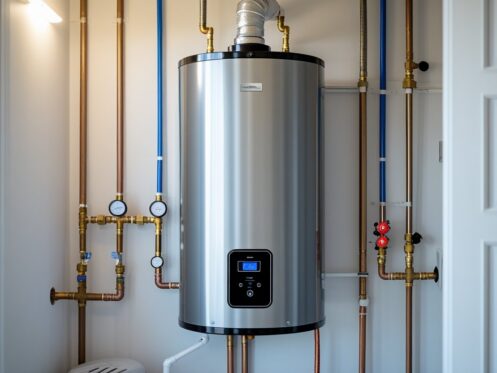
Understanding Your Water Heater
Knowing the basics of your water heater can help you spot problems and fix them faster. Your water heater has different types, works in certain ways, and uses specific heating methods to warm your water.Types of Water Heaters
There are several types of water heaters you might have at home. The most common one is the storage tank water heater. This model heats water in a large tank and keeps it ready. You might also have a tankless water heater, which heats water only when you need it. This saves space and energy because it doesn’t keep water hot all the time. Other less common types include hybrid heat pump water heaters and solar water heaters. Hybrids use electricity and air to heat water efficiently. Solar heaters use sunlight, cutting down on energy bills.How Water Heaters Work
Water heaters heat cold water and keep it ready for when you turn on the tap. A tank water heater heats a batch of water and stores it until you need it. When hot water runs low, the heater turns on again to refill the tank. Tankless heaters work differently. They heat water quickly as it flows through the system using electric elements or gas burners. This means you don’t get a limited supply but water heats on demand. Your water heater has a thermostat that controls the temperature. If the thermostat isn’t set right or stops working, your water might not stay hot.Common Heating Methods
Most water heaters use electricity or gas to heat water. Electric heaters use heating elements inside the tank. These elements warm the water directly when powered. Gas water heaters use a burner below the tank to heat the water. They need a vent to release fumes safely outside your home. There are also heat pump water heaters that move heat from the air to heat water. They save energy but might need more space. Electric and gas heaters are the most popular, so knowing which one you have helps you understand how to fix it.Identifying Why Your Water Heater Won’t Stay Hot
Knowing what to look for can help you figure out why your water heater is not keeping water hot long enough. You might see some signs, have ideas about what causes it, and know ways to check the problem yourself.Symptoms of a Failing Water Heater
If your water heater stops delivering hot water quickly, you might notice:- Water temperature drops after a few minutes
- Water remains cold even after waiting
- Strange noises like popping or rumbling
- Water smells or looks unusual
Possible Causes of Inconsistent Hot Water
Several problems can cause your water heater to lose heat fast:- Faulty thermostat: If the thermostat doesn’t work, water may not get hot enough.
- Broken heating elements: Electric heaters have coils that can break or wear out.
- Faulty gas valve or thermocouple: Gas heaters need these parts to keep the flame on.
- Aged water heater: Old tanks often lose efficiency or have damaged dip tubes.
- Bypass valve open: Cold water could mix with hot water if valves are set wrong.
How to Diagnose the Problem
Start by checking simple issues before calling for help:- Test the water temperature: Use a thermometer at the hot water tap to confirm actual heat.
- Inspect valves: Make sure no bypass or mixing valve is open.
- Look for error codes: Newer models might show error messages on a panel.
- Listen for noises: Popping sounds could mean sediment build-up.
- Check power or gas supply: Make sure the unit is getting power or gas and the pilot light is lit if gas-powered.
Troubleshooting Thermostat Issues
When your water heater can’t keep the water hot, the thermostat might be the cause. You’ll want to check the settings, make sure the temperature is right, and possibly replace the thermostat if it’s not working.Checking the Thermostat Settings
Start by turning off the power to the water heater to avoid shock. Remove the access panel and insulation to see the thermostat. Check if the thermostat is set to the right mode—electric heaters usually have two thermostats, one for the upper element and one for the lower. If the settings are off, your water might not get hot enough or might cut out too soon. Look for signs of damage or corrosion. Loose or burnt wires can cause problems. Use a multimeter to test if the thermostat is getting power and sending power to the heating elements. If you’re unsure, Splash Plumbing can help you diagnose the issue safely.Adjusting Water Temperature
If the thermostat settings look fine, you may need to adjust the temperature. The ideal setting is usually between 120°F and 140°F. Setting it too low can cause the water to feel cold, while too high can waste energy and risk burns. Turn the dial gently to increase or decrease the temperature. After adjusting, wait about an hour and test the water temperature at a faucet to see if it feels hotter or stays warm longer. If your water heater still won’t keep water hot, the thermostat might be malfunctioning or the heating elements might need attention.Replacing a Faulty Thermostat
If checking and adjusting the thermostat doesn’t fix the problem, the thermostat may be broken. Signs of failure include the water heater turning off too soon, no hot water, or inconsistent temperature. Replacing a thermostat requires turning off power and draining the tank partially. Remove the wires and screws holding the thermostat in place and install the new one by reversing these steps. Use a multimeter to test the new thermostat before fully reassembling. If you’re not confident, calling experts like Splash Plumbing near Anaheim, CA, can save you time and ensure the job is done right. They can test your thermostat and replace it safely to restore your hot water.Addressing Heating Element Problems
If your water heater won’t stay hot, the heating element could be the cause. Knowing the signs of a faulty element and how to test or replace it can save you money and time.Signs of a Bad Heating Element
You might notice your water isn’t getting hot enough or runs out quickly. Another sign is uneven heating—sometimes your water is hot, other times it’s cold. You may also hear strange noises like popping or crackling from the tank. These sounds often come from sediment buildup around the element. If your electric water heater trips the circuit breaker or doesn’t heat at all, it points to a bad heating element or a short in the wiring. Visual inspection can reveal corrosion or burnt spots on the element. If any of these signs sound familiar, the heating element likely needs attention.Testing and Replacing the Element
First, turn off power to your water heater at the breaker box. Next, drain some water from the tank to avoid spills. Remove the access panel and insulation to find the heating elements. Use a multimeter to test for continuity. Set the meter to the lowest ohm setting and touch the probes to the element terminals. A reading close to zero means the element is good. If it shows no continuity, it needs replacement. To replace, disconnect the wires, unscrew the faulty element, and install a new one of the same size and wattage. Tighten the screws to avoid leaks, reattach wires, and restore power. Flush the tank to clear sediment, which helps extend the new element’s life. If you’re near Anaheim, CA, Splash Plumbing can help with testing and replacing heating elements to get your hot water flowing again.Resolving Pilot Light and Ignition Problems
If your water heater isn’t staying hot, the pilot light or ignition system could be the problem. Fixing these issues usually involves relighting the pilot, checking certain parts like the thermocouple, or addressing faults in electronic ignition systems.Relighting the Pilot Light
First, check if the pilot light is out. Make sure the gas supply is on and there’s no gas smell before you proceed. To relight it, turn the gas control knob to “pilot” and press it down to start the gas flow. Use a long lighter or match to ignite the flame in the pilot opening while holding down the knob. Keep the knob pressed for about 30 seconds after lighting to allow the thermocouple to heat up and signal the gas valve to stay open. If the pilot light won’t stay lit after you release the knob, don’t try relighting it repeatedly. This could mean there’s a deeper issue requiring a professional.Checking Thermocouple Function
The thermocouple is a safety device that detects if the pilot light is on. If it’s faulty, the gas valve will shut off, making your water heater stop heating. Look for signs like the pilot light flickering or going out shortly after lighting. The thermocouple sits near the flame; check if it’s dirty or bent. Cleaning it gently or adjusting its position may help. If these steps don’t work, the thermocouple likely needs replacement. This part is inexpensive, but proper installation is key for safety.Dealing with Electronic Ignition Failures
If your water heater uses electronic ignition, problems may stem from the igniter or wiring. Signs include clicking sounds without ignition or no attempt to light at all. Start by inspecting the igniter for dirt or breakage. Clean or replace it if needed. Also, check the wiring connections for corrosion or loose fits. Sometimes, electronic components need resetting, which you can do by turning off the power and gas for a few minutes and then restarting. If issues continue, a qualified plumber should handle repairs to avoid risks. For residents of Anaheim, CA, Splash Plumbing can help you safely handle these pilot light and ignition issues quickly and correctly.Tackling Sediment Build-Up in the Tank
Sediment can build up in your water heater over time, especially if you have hard water. This buildup affects how well your heater works and can cause problems like noises or uneven water temperature. Knowing what sediment does and how to flush it out can help keep your water heater working properly.Effects of Sediment on Heating
Sediment is made up of minerals like calcium and magnesium that settle at the bottom of your water heater tank. When this layer builds up, it acts like an insulator. This means the heating element has to work harder to warm your water, which lowers the heater’s efficiency. Sediment can also cause strange noises such as popping or rumbling. These sounds happen because trapped water under the sediment heats up and creates steam bubbles. Plus, sediment buildup can shorten the life of your heater and lead to cold spots in your water. To avoid these issues, it’s important to manage sediment regularly.Flushing the Water Heater
Flushing your water heater removes the sediment and helps restore efficiency. Start by turning off the power or gas supply to your heater. Next, attach a garden hose to the drain valve at the bottom of the tank and direct it to a safe drainage area. Open the valve and let the tank empty completely. This may take 10-15 minutes depending on your model. After draining, close the valve and remove the hose. Turn the water supply back on to refill the tank. Finally, turn the heater’s power or gas back on. Regular flushing, about once a year, can prevent large sediment buildup.Improving Water Pressure and Flow
Fixing a water heater that won’t stay hot often means making sure your water pressure and flow are working well. Low pressure or blockages can lead to uneven heating and longer wait times for hot water at your taps. Checking your system can help you find and fix these issues.Inspecting for Blockages
Blockages in pipes or filters can lower your water pressure and reduce flow. Start by checking the inlet screen on your water heater for debris. Sediment build-up inside the tank or pipes can also block flow, so flushing the system is a good step. Look for any kinks or damage in your hot water pipes as these can limit water movement. Sediment often collects at the bottom of the tank, so a regular flush can clear it out. You might notice that water comes out weak or irregular if these blockages are present. If you’re not sure how to flush or check for blockages, Splash Plumbing can help you get your system running smoothly.Testing Pressure Relief Valve
The pressure relief valve protects your water heater from too much pressure buildup, but if it malfunctions, it can cause flow problems. To test it, first locate the valve usually near the top or side of the heater. Lift the valve’s lever slightly to let some water out. If water flows freely and stops when you release the lever, the valve is working. If water keeps leaking after release or no water comes out, the valve may need to be replaced. A faulty valve can cause the heater to lose heat or reduce water flow. If you find issues, consider calling a pro to handle valve repairs quickly.Maintaining Your Water Heater for Lasting Performance
Keeping your water heater working well means checking parts often and doing simple maintenance tasks. This helps avoid common issues like running out of hot water or losing heat fast.Regular Inspection Tips
Look over your water heater every few months. Check the anode rod inside the tank. If it is corroded, replace it to stop rust from damaging the tank. Also, inspect for leaks or signs of rust on the outside of the tank. Look at the thermostat and make sure it’s set to about 120°F. This keeps your water hot enough without using too much energy. Pay attention to the pipes near the heater. Insulating them can save heat, so make sure the covering is intact. If you smell gas or hear strange noises, turn off the heater and call a plumber right away. Splash Plumbing can help you with inspections if you want a professional checkup.Routine Maintenance Tasks
Flush your water heater tank once a year to remove sediment buildup. This buildup can cause your water to heat unevenly or run out fast. Draining some water from the tank also keeps it clean inside. Replace the dip tube if it is cracked or missing. A bad dip tube lets cold water mix too quickly with hot water, which makes your hot water disappear fast. Also, press the reset button if your heater stops heating properly. This small fix can often solve minor problems. When in doubt, get help from a reliable plumber like Splash Plumbing near Anaheim, CA.When to Call a Professional Plumber
Sometimes, fixing your water heater isn’t a quick or simple job. Knowing when to ask for help can save you time, avoid damage, and keep your home safe. It’s important to recognize signs that your water heater needs more than just a DIY fix and to know how to find the right professional for the job.Recognizing Situations Beyond DIY Repair
If you notice your water heater leaks, makes loud or strange noises, or the water smells bad or looks rusty, it’s time to call a pro. These problems usually mean there’s damage inside the tank, corrosion, or a broken part you shouldn’t try to fix yourself. Electrical issues like a tripped breaker or a pilot light that won’t stay lit might be things you can check, but anything involving gas lines or changing major parts should be left to a licensed plumber. If your water heater is more than 10-12 years old and stops working properly, a professional can help you decide if repair or replacement is best.Choosing a Qualified Technician
Look for a plumber with experience in water heater repair and proper licensing. Ask if they work with the type of water heater you have—tankless, electric, gas, or solar. A good plumber will explain the problem clearly and give you a fair price before starting work. Splash Plumbing is one option to consider if you are near Anaheim, CA. Their team has been serving Orange County since 1998 with honest service and fast response times. Choosing a company that cares about customer satisfaction and safety is key to fixing your water heater right the first time.Preventing Future Hot Water Issues
Keeping your water heater working well means taking some simple steps regularly. You can extend its life and enjoy better performance by caring for it properly and thinking about modern upgrades when the time is right.Extending Water Heater Lifespan
Regular maintenance helps your water heater last longer and avoids sudden breakdowns. Flushing the tank once a year removes sediment buildup that can cause rust and reduce heating efficiency. You should also check the anode rod every couple of years; it protects your tank from corrosion. Adjust the thermostat to around 120°F to prevent overheating and save energy. Too high a temperature can wear out parts faster. Make sure pressure relief valves work properly and inspect for leaks regularly. If you see rust or water pooling near your heater, call a plumber quickly.Upgrading to Modern Technology
If your water heater is old, think about switching to newer models that save energy and heat water more evenly. Tankless water heaters, for example, only heat water when you need it. This reduces waste and can save money on your utility bills. Hybrid models combine heat pump technology with traditional heating, which can cut energy use by up to 60%. Solar water heaters use sunlight to warm your water, lowering your electricity or gas needs. Upgrading means less hassle and more reliable hot water. It’s a smart choice if you often run out or your heater breaks down often. Splash Plumbing can guide you on the best option for your home and install it with no fuss.Frequently Asked Questions
Knowing what causes your water heater to lose heat, how to check common problems, and how to do simple fixes can save you time and money.What could be causing my electric water heater to lose heat quickly?
Your electric water heater might lose heat because of a faulty thermostat or heating element. Sediment buildup inside the tank can also reduce heating efficiency. Check the thermostat settings first, then test the heating elements with a multimeter to see if they need replacement. Also, draining the tank can remove sediment and improve performance.How do I troubleshoot a gas water heater that isn’t maintaining its temperature?
Start by making sure the pilot light is on. If it goes out, check the thermocouple, which may be dirty or faulty. A dirty burner can stop proper heating. Clean it carefully or call a professional if you’re not comfortable. Also, inspect the thermostat and gas supply for issues.Is there a way to reset my water heater when it’s not heating properly?
Yes, many electric water heaters have a reset button, often located behind the thermostat cover. Turn off power before pressing the reset. Gas heaters typically reset automatically when the pilot light relights. If your unit doesn’t respond, you may need professional help.Can a dirty thermocouple affect my water heater’s performance?
Yes, a dirty thermocouple can stop the pilot light from staying lit, causing your heater to lose heat. Cleaning or replacing the thermocouple often fixes this problem. If you’re unsure how to do this, the experts at Splash Plumbing can help.What steps are involved in flushing a hot water heater to improve its efficiency?
Turn off your water heater and water supply first. Then, attach a hose to the drain valve and drain the tank completely. Flush with clean water to remove sediment. This process helps your heater run better and last longer. Do this once a year for best results.What is a dip tube, and how do I repair or replace one in my water heater?
The dip tube directs cold water to the bottom of the tank for heating. If broken, cold water mixes with hot water at the top, making your water less hot. To replace it, turn off the water and power. Drain the tank and remove the cold water inlet pipe. Install the new dip tube and reassemble. If you need help, Splash Plumbing can handle this safely for you.
Meet the Author